
When Documentation Helps — and When It Gets in the Way
- Space Captures Team

- Jan 16
- 2 min read
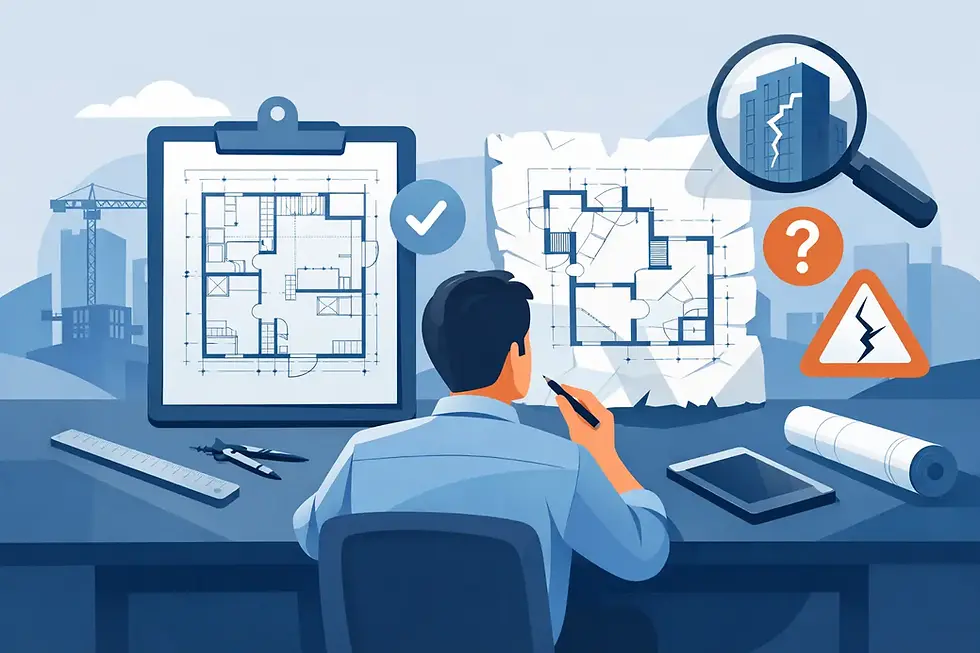
On complex existing buildings, documentation does one of two things. It either supports the design team —or it quietly works against them.
There isn’t much middle ground.
The role documentation actually plays
At the start of a project, drawings are often treated as background material. Something to refer to, check against, or “work around” if needed.
As the project moves forward, that changes.
The same information starts being used to:
make design decisions
resolve coordination questions
check feasibility
answer site and consultant queries
At that point, the quality of the base information becomes very visible.

When the base information is solid
When documentation is clear and consistent, teams tend to move faster — not because there are fewer questions, but because the answers are already there.
Design decisions get made earlier. Coordination happens with more confidence. Assumptions are reduced.
The documentation doesn’t need to be revisited constantly, which allows the design team to focus on the work that actually moves the project forward.
When it isn’t
When the base information is weak, the design process starts compensating. Extra checks appear. Clarifications are needed. Revisions increase.
None of this usually feels dramatic at first. It builds gradually, often going unnoticed until time pressure increases or changes are introduced.
By then, the project is already moving — and correcting the foundation becomes harder.
Documentation as working information
On complex existing buildings, documentation isn’t just a starting reference.
It’s working information that carries the project through design, coordination, and delivery.
When it does its job well, it fades into the background. When it doesn’t, it becomes a source of friction.
Most teams only realise which situation they’re in once the project is already underway.


Comments